

Data is wonderful; it is everywhere, and handling it is akin to an art form.However, contrary to expectations, this guide is not about analytics or tracking. Instead, it focuses on the visual preparation of data as a way to enrich your online content and serve as a powerful source for new backlinks.
Summary: You can save yourself the effort of manual link-building outreach by creating content that generates backlinks on its own. Statistics represent a type of content that offers immense added value, primarily for journalists and bloggers. By providing visually processed data, you position yourself to be linked as a primary source on the websites of various authorities in your field.
What is a Backlink?
We define a backlink as an incoming, external link. This means another internet address (domain) refers back to our website.
Or, put simply: "A backlink is a reference."
Why are backlinks so important?
Backlinks are the hubs of the internet. Links between websites are what make it possible for search engines to find new pages with so-called "crawlers" and include them in their index.
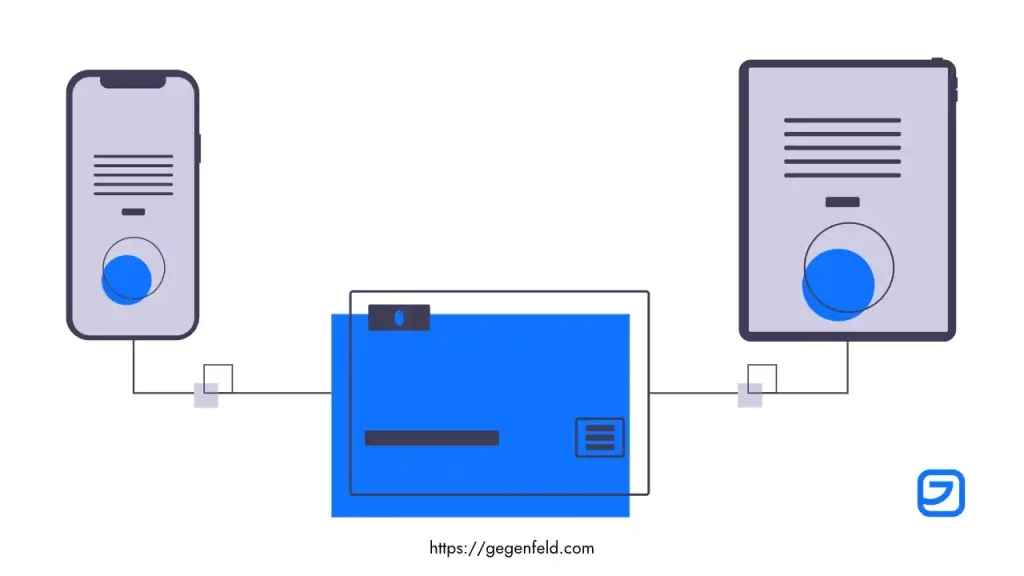
For Google and other search engines, these references are a vital indicator for evaluating the seriousness of your website. If your site is linked by other established pages in the same field, it is highly probable that you are a trustworthy source. To ensure your page appears at the top of search results, you need backlinks to confirm your credibility. Without them, it becomes very difficult to be found organically.
How do I get Backlinks?
As mentioned, backlinks often serve as a reference. Consequently, you should create valuable content for your target audience. Offer yourself as a reputable information provider in your field.
By doing so, you increase the likelihood that a journalist or blogger will find the answer to their question on your site. If they use your answer, they will reference you. You already know that backlinks are literally the backbone of the internet, and that it is essential to be linked by other authorities in your niche to be found via search engines.
The logical conclusion: Your goal is to obtain high-quality backlinks—as many as possible. Of course, you aren't the first person to have this idea. An entire branch of marketing, namely "Off-Page SEO," deals primarily with building strategies for backlinks. In English, this is called "Link Building."
What is Link Building?
It describes the concept of increasing the number of backlinks to your own site. There are various strategies for building backlinks that give your website more authority and expertise. The foundation is a rule-compliant execution to avoid Google penalties.

How does Link Building work?
Most marketers follow the same principle: they write outreach emails to obtain more backlinks.Definition:E-mail outreach is a strategy in which you contact specifically selected people to move them toward a positive action. In the SEO field, we write an email to suggest our content to other websites. Frequently, one suggests their own content as a source, hoping the recipient follows the advice and grants a backlink.
The Disadvantage of Link Building
Whether you use the "Skyscraper Technique," Broken Link Building, or guest posting, you generally invest a vast amount of time in searching for, evaluating, and contacting potential link prospects.
Whether your outreach actually leads to a link is often left to chance. On average, only 8% of all outreach emails result in a response—let alone a link.

As if that weren't enough, your time is what suffers most under this approach. Yet, you need that time to produce the very content you want to market.
The New Strategy
Instead of the tedious outreach process, a new strategy takes center stage.
You create data-based content—primarily statistics, infographics, and templates—that are in high demand among journalists, bloggers, and other content creators.

The Advantage of Statistics
Your statistics are superior to standard articles for the following reasons:
They are highly sought-after resources.
They convey expertise.
They generally provide valuable, unique data.
From this list, we can also derive who values statistics as a content type: primarily journalists and bloggers who want to enrich their articles with graphically processed data. For you, this means that to get backlinks from "E-A-T" (Expertise, Authoritativeness, Trustworthiness) compliant websites, you must memorize this sentence:
"Produce statistics and infographics!"
Inverted Outreach and Link Building
If a journalist uses your statistic, they will be required to link to the source. By providing critical data and information, you offer such high value that your link prospects come to you proactively.
The result is obvious: you save yourself the grueling outreach and simultaneously receive high-quality backlinks from authorities in your field.
Journalistic Keywords
You must find "journalistic keywords" so that journalists can find you and your statistics. These keywords can often be recognized by phrases that indicate a deeper interest in information.
Possible Search Indicators:
[Countries] / [Cities]
[Year]
[W-Questions (Who, What, Where, Why)]
[Superlatives]
Month / Day
"Statistic" / "Infographic" / "Usage"
Example Keyword:
General: "Tasty types of bread"
Journalistic: "Most popular bread types Germany"
To find the right search queries, we will introduce a method to discover potentially worthwhile keywords. Please implement this method alongside the guide for optimal learning.
Research with Google Search
Google Search is one of the best keyword tools—no joke.
Search your Keyword: Suppose you are a baker and want to publish a statistic on the most popular rolls in Germany. Search Google for "Most popular rolls Germany."
Analyze Search Results: Look at the top 3 results. Open the pages and look for indicators of journalistic interest, such as statistics, tables, or lists.
Browse "People Also Ask": Google displays the "Related Questions" box. These often contain questions that bloggers and journalists want to answer in their articles. Check if your statistics can answer these.
Group by Data Type: Once you’ve found your keywords, determine which data types are in demand.
Analyzing Keywords and Pages
Now, analyze these keywords with an SEO tool of your choice (e.g., Ahrefs, Semrush). The goal is to find the most important pages for each keyword. "Important" is defined here by the number of external sites linking to your competitor.
Check Competitors
Filter out your main competitors. Pay attention to high thematic relevance and the backlink count.
Remember: The more backlinks a page has for a journalistic keyword, the higher the likelihood that bloggers and journalists are actively searching for this content.
You can see the exact links as soon as you switch to the detail view in your SEO tool.
Check Bloggers and Journalists
Next, browse the sites that link to your competitors. Identify further thematically appropriate topics they have written about. Use this information to create statistics for high-demand topics.
Data Sources for Statistics
Now for the practical part: creating the posts. Every statistic relies on data, so you need a source.

1. First-Hand Data
It is ideal if you are the source yourself.
Pros: Data sovereignty, ownership, individual measurement methods.
Example: A bakery tracking revenue and product demand over several years to create "Most Popular Rolls 2012–2022."
Cons: High effort, possible costs, time-intensive.
2. Open Data
The internet is full of free data from "Open Data" projects.
Pros: Low to no cost, large datasets, often from governments or NGOs.
Cons: Not always up-to-date, usage depends on specific licenses (often non-commercial only).
List of Open Data Projects:
Statistisches Bundesamt (Destatis)
European Portal for Data
US Government’s Open Data
Google Dataset Search / Public Data Explorer
Pew Research Center
World Bank / WHO / UNICEF Data
3. Paid Data Sources
You save time by paying for data.
Pros: Low effort, cleared usage rights, structured and current datasets.
Providers: Statista, Mintel, IBISWorld, YouGov, Nielsen.
Planning and Implementation
Plan your article by mapping your keywords and questions to specific data types and visual forms. We recommend using software like Excel or Notion for this.
Creating the Statistics
Depending on your technical skills, you can program statistics via JavaScript or use third-party tools. This guide focuses on Canva, which allows even beginners to visualize data easily.
Note: Prepare visual elements to meet user expectations. If a user expects a list, your post should include visual lists. This ensures your image preview appeals to users in "Featured Snippets."
Importing Data into Canva
Manually: Click on your chart and enter values under the "Data" tab.
Google Sheets: Connect your Google account to Canva and import your table directly.
Other Tools: For more complex visualizations, we use Tableau, Datawrapper, or Google Data Studio.
Conclusion
Find journalistic keywords and questions you can answer. Research your competitors to see their most-linked content and create a better alternative. Gather data from the sources described, and finally, visualize it using a tool like Canva.
With this strategy, you can create a guide filled with statistics in just a few hours—content that bloggers and journalists will be eager to use as a source.
Written by
Gegenfeld Team
Gegenfeld Team